
What we’ve been writing about
A bunch of essays since our last update that we think you'll like


Since our last update, we’ve published essays at a number of outlets in the spirit of Random Acts of Medicine that we think you’ll like:
Natural experiments, from ourselves and others
Gun Injuries of All Kinds Go Up During Hunting Season (TIME)
Our own study, published in The BMJ, found that firearm injuries of all kinds—not just hunting accidents—spike when hunters head out for the deer-hunting season opener and guns come out of storage.
Could the Shingles Vaccine Help Prevent Dementia? (TIME)
When Wales rolled out its shingles vaccine with a strict birthday-based eligibility cutoff, it accidentally created a natural experiment that gave researchers insights beyond the vaccine’s ability to prevent shingles.
Smartphones, Online Music Streaming, and Traffic Fatalities (NBER)
By treating the release dates of blockbuster albums as an arbitrary, exogenous surge in smartphone use, we found that U.S. traffic fatalities rise by roughly 15% on those days. The study was later covered in The New York Times, which opted to run this “serious” photo of us with two brilliant resident physician co-investigators, Vishal Patel and Michael Liu.
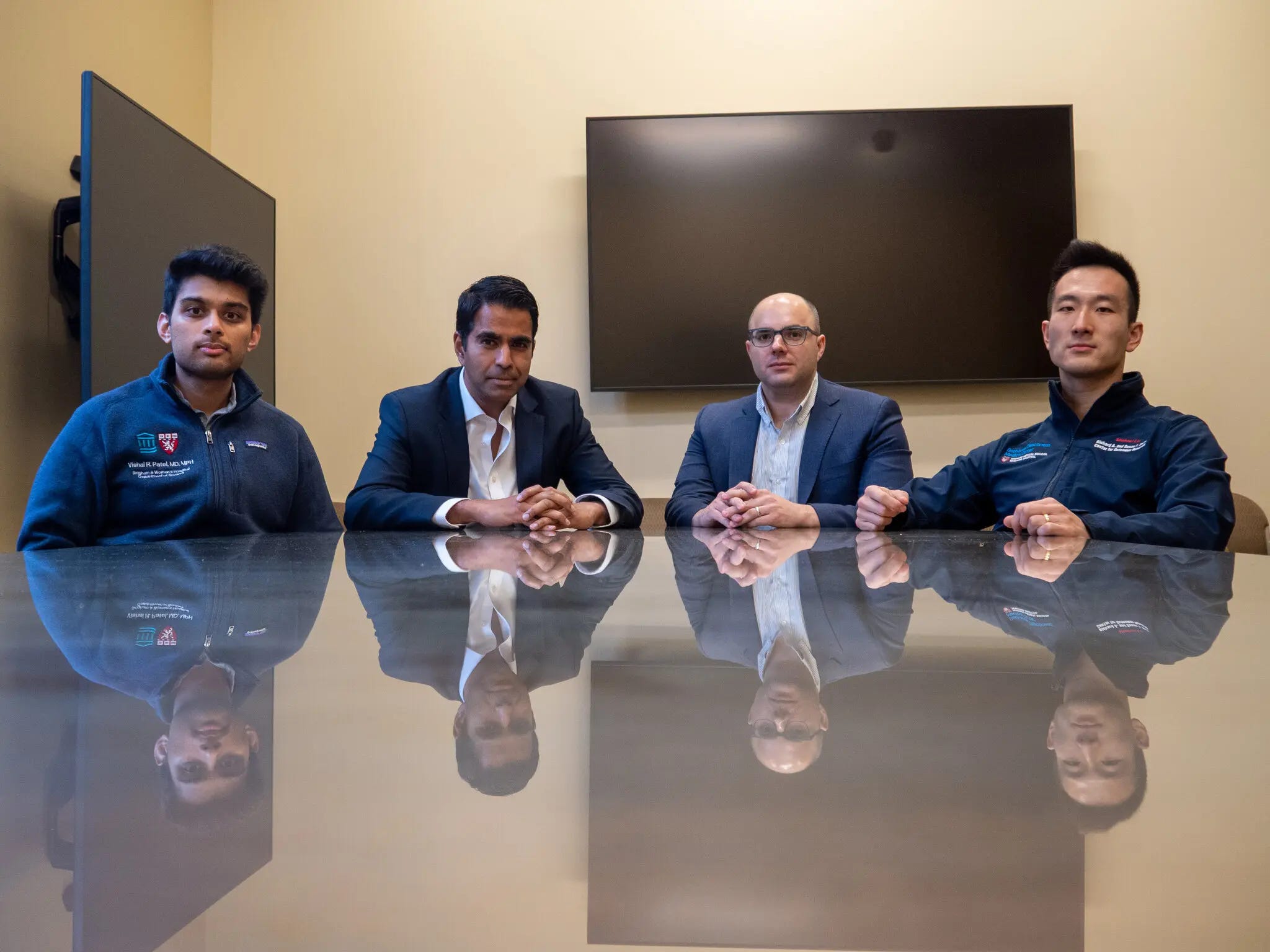
The study was the focus of an episode of Freakonomics Radio, where we also discussed our approach to research in an age of abundant data with Stephen J. Dubner.
Women Live Longer Than Men — But Not in Medicine (TIME)
Women outlive men by about five years. Except, we found out in a study of our own, among physicians, where that survival gap nearly disappears.
Clinical Trials Have a Gender Problem (TIME)
Drawing on a study by Bapu, Harsh Gupta, and Eric Sun: clinical trials led by women enroll more women, pointing to one potential way to improve the long-standing representation problem in clinical trials.
Commentary on science, evidence, and policy
The New CDC Study on Vaccines and Autism Should Take a Radical Approach (TIME)
Rather than another study destined to be waved away by skeptics, we argued the federal administration’s planned research on vaccines should be built as an adversarial collaboration, a study designed in advance with doubters at the table.
Does Tylenol Cause Autism? Here's How We Could Find Out (WSJ)
After the FDA warned that prenatal acetaminophen might be tied to autism and ADHD, we explored how one might actually evaluate for causal linkage without a randomized trial.
Big Data Can Make America Healthier. How to Do It Right (TIME)
As people who spend our days in large health datasets, we like the idea of a national data platform for research, but such a platform raises obvious concerns. We offer some guiding principles for doing it well.
What Is the Right Government Role in Advancing Medical Science? (STAT)
Our contribution to STAT’s First Opinion series on the future of the NIH: what should the federal government be doing when it funds biomedical research?